Article
How Did Things Get So Tough Out There?
Feb 15
How did this happen?
When I talk to some of my friends and former students at industry meetups, they often ask me how our industry got in such rough shape. To really break this down, I think it’s useful to look at the Disney as a case study. Looking at the history of this studio, we can see the big shifts in the media landscape that are affecting the entire entertainment ecosystem. It’s affecting everyone that works in media, not just VFX artists.
Originally this article was much, much longer, but I’m going to focus in on Disney starting in the late 00’s.
I learned most of this stuff from a podcast, Land of the Giants. It’s good.
- How could Disney afford to buy Pixar in 2006 for 7.4 billion?
- How could Disney buy Marvel in 2009 for 4 billion?
- What gave Disney the capitol to buy Star Wars in 2012 for 4 billion
In 2011, 70% of Disney’s operating income came from it’s Cable Networks and Broadcasting/ABC.
This entire segment of Disney’s business is now in rapid decline.1
Early Streaming
The decline started around 2015. "Cord-cutting” started to make a noticeable dent.2 Even mighty ESPN has started to see subscribers drop in massive amounts.
The rise of streaming was seen in the popularity of Game of Thrones. The season 4 finale was at the time considered to be the most pirated episode of television ever. This underscored that a new generation wanted access to premium content without cable subscriptions. HBO recognized this shift and sought to build a direct-to-consumer streaming app.
Lacking in-house tech expertise, HBO partnered with BAMTech, a company known for streaming MLB games. The result was HBO Now, the first major media company to go directly to consumers. Eventually Disney purchased BAMTech to power Disney+.
While a slight decline in cable subscribers was observed as early as 2011, media executives understood a fundamental shift was underway. However, transitioning to streaming while cable remained profitable was a precarious balancing act. Streaming services were barely profitable, and Wall Street viewed tech companies differently than established media giants like Disney. Tech companies were afforded leeway for losses in pursuit of growth, a luxury not extended to Disney, where pivoting would hurt share prices.
The traditional cable bundle had been incredibly profitable for Disney. They could focus on content creation, leaving technology and customer service to cable providers. Initially, Disney licensed its content to Netflix, a move that seemed like "free money." Netflix paid Disney $300 million to license shows, inadvertently fueling Netflix's rise to dominance. This licensing included not only Disney movies but also ABC hits like Lost and Grey's Anatomy.
Disney initially viewed Netflix as merely a "distributor," believing creative power remained with content creators. However, Netflix evolved, becoming a content creator itself, producing original hits like House of Cards and Orange is the New Black. Disney underestimated the speed of streaming's growth, believing pay TV would remain dominant for longer.
However, broadband speeds in the US doubled within a few years, and devices like Roku and Apple TV made streaming on televisions easy. Netflix transformed into a hybrid media and tech company, disrupting the established order.
Disney recognized the eventual end of cable TV and the rise of streaming, but the speed of the transition caught them off guard. Iger apparently thought their content licensing deal with Netflix was "selling nuclear weapons to a third-world country," weapons now being used against them.
Amazon entered the streaming arena with Prime Video, further intensifying competition. Disney, facing an "existential crisis," accelerated its streaming ambitions. They invested heavily in BAMTech in 2016, eventually acquiring the company outright to build their own streaming platform, Disney+. Disney nabs rest of BAMTech streaming company for $900M - Light Reading The launch was planned for 2019, marking the dawn of the "streaming wars."
The end of 2019 witnessed the launch of Disney+ and Apple TV+, followed in the second quarter of 2020 by Quibi, HBO Max, and Peacock. All major media companies launched their streaming services in close proximity, unleashing a content boom.
If you worked in VFX at this time, you remember the insanity of how busy you were. The pandemic slowed things down for a week or so while we transitioned to working from home. And production did stop for a few months, but it roared back very quickly.
These new streaming platforms desperately wanted content to attract subscribers. Disney, in a move to bolster its library for Disney+, acquired 21st Century Fox in 2019 for a staggering $71 billion. The Fox deal was explicitly aimed at competing with Netflix's vast content library.
The initial strategy was subscriber acquisition at all costs, with profits be damned. Disney+ aimed for 60 million subscribers in four years but reached 70 million in just one year, demonstrating the initial success of this approach.
The Downturn
However, by 2022, the tide began to turn. Netflix experienced subscriber losses, resulting in a $50 billion market cap decline. The focus shifted from subscriber growth to profitability. Streamers began removing shows to write them off for tax breaks and prioritized "quality content" (another term for ‘fewer shows’) to reduce subscriber churn. Cost control became paramount, leading to cuts in new shows and layoffs across the industry.
While competing with tech giants in the streaming space, Disney was not perceived as a tech company by Wall Street. Amazon and Apple could absorb billions in streaming losses as a relatively minor part of their diversified businesses. For Disney, streaming needed to demonstrate profitability. FAANG companies could use streaming as a "loss leader" to drive other parts of their ecosystems. Netflix, while solely focused on streaming, had first-mover advantage and strong brand recognition.
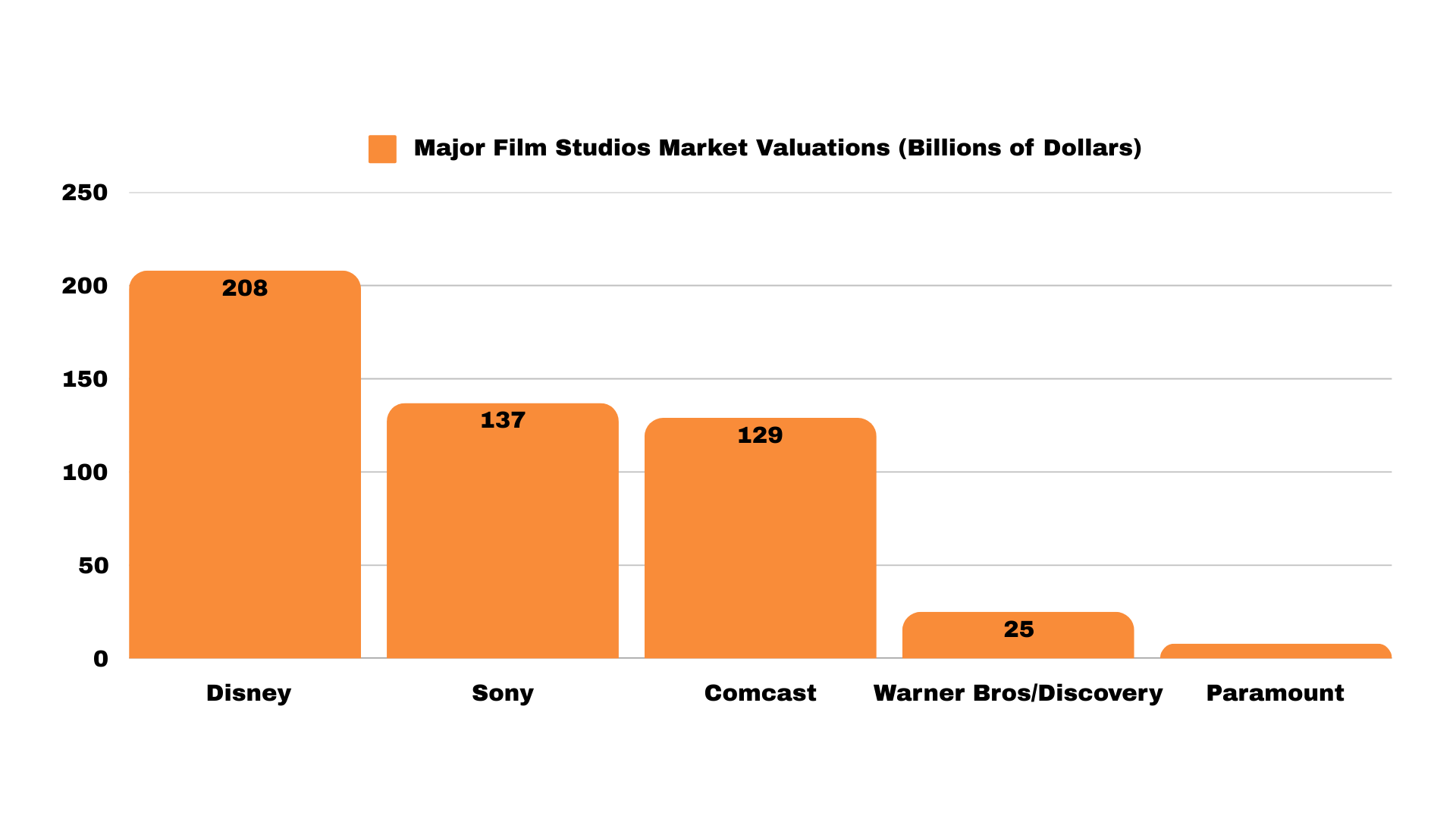
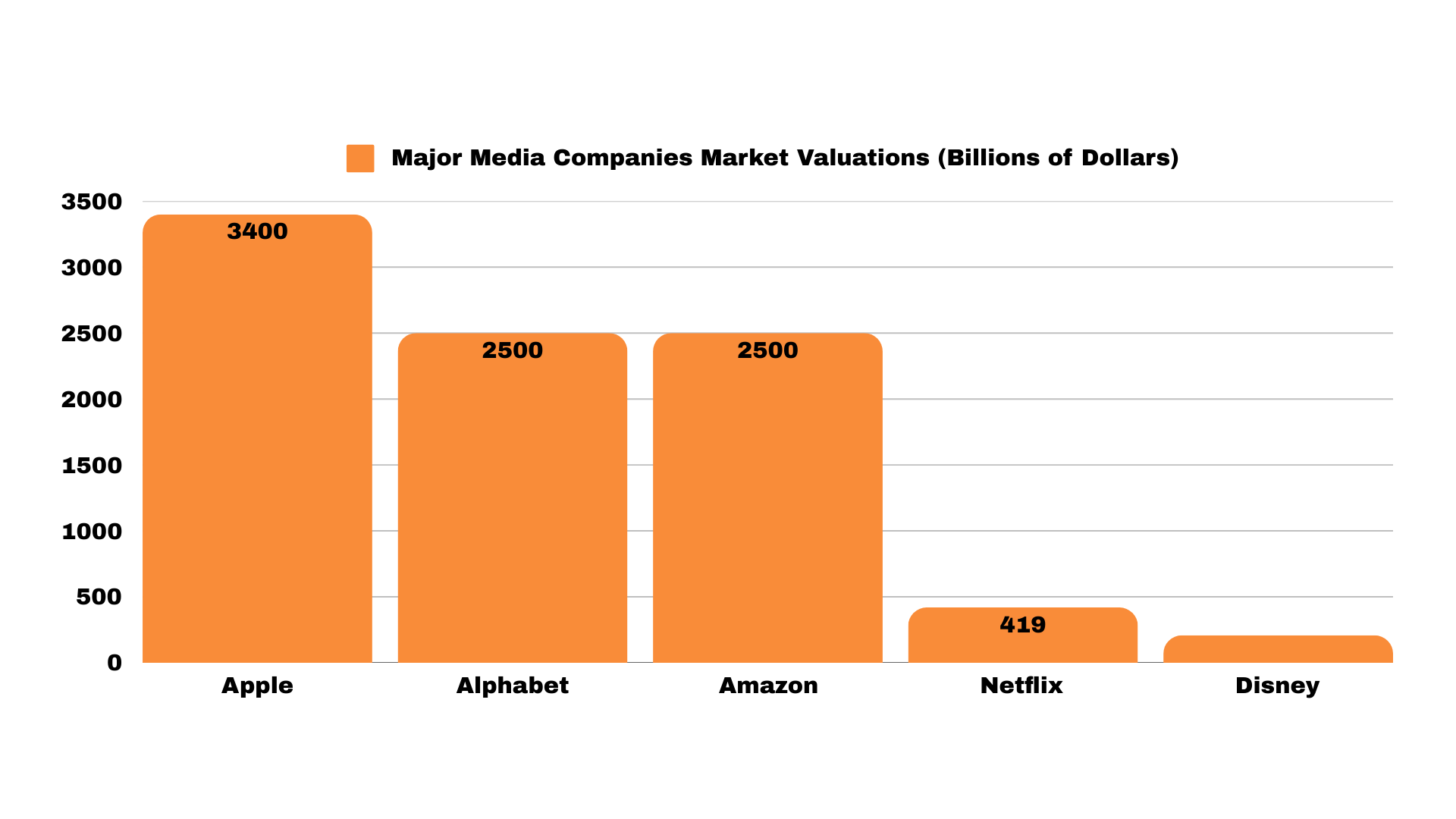
Since Bob Iger's return as CEO, Disney has doubled the price of Disney+, moving away from the initial aggressive pricing strategy. Disney Plus Price: Everything To Know About Subscriptions - Cinemablend The focus is now on targeting dedicated fans and bundling services. While Netflix remains the streaming leader, Disney+ has achieved profitability, but faces the ongoing challenge of subscriber churn.
This is one major part of why the industry is in rough shape right now. The majority of high-production value shows have left broadcast and cable networks for streamers, and the streamers are now cutting back.
The other major factor is the rise of YouTube and user-generated content. More people watch YouTube on their TVs than any other broadcast network, but that’s for another article.
Footnotes:
- Viewership Plummets: Disney Channel and Nickelodeon have experienced massive drops in linear viewership. Disney Channel's viewership fell by 90% from 2016 to 2023, while Nickelodeon's plummeted by 86% in the same period. In 2016, Disney Channel averaged 1.316 million daily viewers, but by last year, this number had dropped to just 132,000. TheWrap
- Overall Cable Viewership Decline: More broadly, cable viewership is "cratering". Buttondown This is a long-term trend affecting traditional linear TV as audiences move to streaming and online content like YouTube. Vocal Media
- Revenue Decrease in Linear Networks: Disney's linear networks have seen a decline in revenue. In the entertainment group, linear networks experienced a 6% revenue decline in a recent quarter, and a 9% decline for the full year. TV News Check From 2022 to 2023, advertising revenue for Disney's linear networks fell by nearly 15%. TheWrap
- Lower Advertising Revenue: The decline in advertising revenue is directly linked to lower viewership ("fewer impressions due to lower average viewership"). The Walt Disney Company Reports First Quarter Earnings for Fiscal 2025, RBR.com
- Operating Income Tumbles: Domestic linear operating income has significantly decreased, for example, falling 34% in a reported period. TV News Check Linear networks' operating income also tumbled by 38% in another quarter. RBR.com
- Subscriber Losses: Linear networks are experiencing lower affiliate revenue due to "fewer subscribers." The Walt Disney Company Reports First Quarter Earnings for Fiscal 2025, TV News Check, RBR.com
-
Source: Cord-cutting - Wikipedia
- This Wikipedia article on cord-cutting provides a historical overview of the phenomenon. It notes that while the term emerged earlier, the measurable impact on cable subscriptions became evident in the early 2010s.
- The article states: "While the term 'cord-cutting' had been in use for some time, it was around 2010–2012 that analysts began to note that cord-cutting was having a measurable impact on the cable television industry."
- It further mentions that "In about 2012–2013, the number of cord-cutters began to accelerate, with revenue and profits at cable television companies beginning to stagnate or decline."
-
Source: When Did Cord Cutting Start? - The Motley Fool
- This article from The Motley Fool, published in July 2013, directly addresses the question of when cord-cutting started.
- It pinpoints 2012 as the year when the decline became undeniable, stating: "2012 was the year cord-cutting went from a threat to a reality for the cable industry."
- The article highlights that in 2012, major pay-TV providers started reporting subscriber losses for the first time, and this trend was expected to continue.
-
Source: Cord-Cutting Is Finally Here - Business Insider
- This Business Insider article, published in May 2013, also emphasizes 2013 as the year cord-cutting became a significant reality.
- The article asserts: "Cord-cutting is finally here. For years, it's been predicted that people would start ditching their expensive cable TV packages in favor of cheaper online alternatives like Netflix. Now, it's actually happening."
- It notes that pay-TV providers were starting to lose subscribers, and attributes this to the rise of streaming services and changing consumer habits.
-
Source: The Rise of Cord-Cutting and What It Means for the Cable Industry - Experian
- This article from Experian provides a broader overview and also points to the early 2010s as the start of the significant cord-cutting trend.
- It explains: "Cord-cutting is the result of a few factors that converged in the early 2010s. Broadband internet became widely available and affordable, and streaming services like Netflix, Hulu, and Amazon Prime Video emerged as viable alternatives to cable TV."